Schnoodle Grooming: Beards, Mixed Coats and Sensible Trims
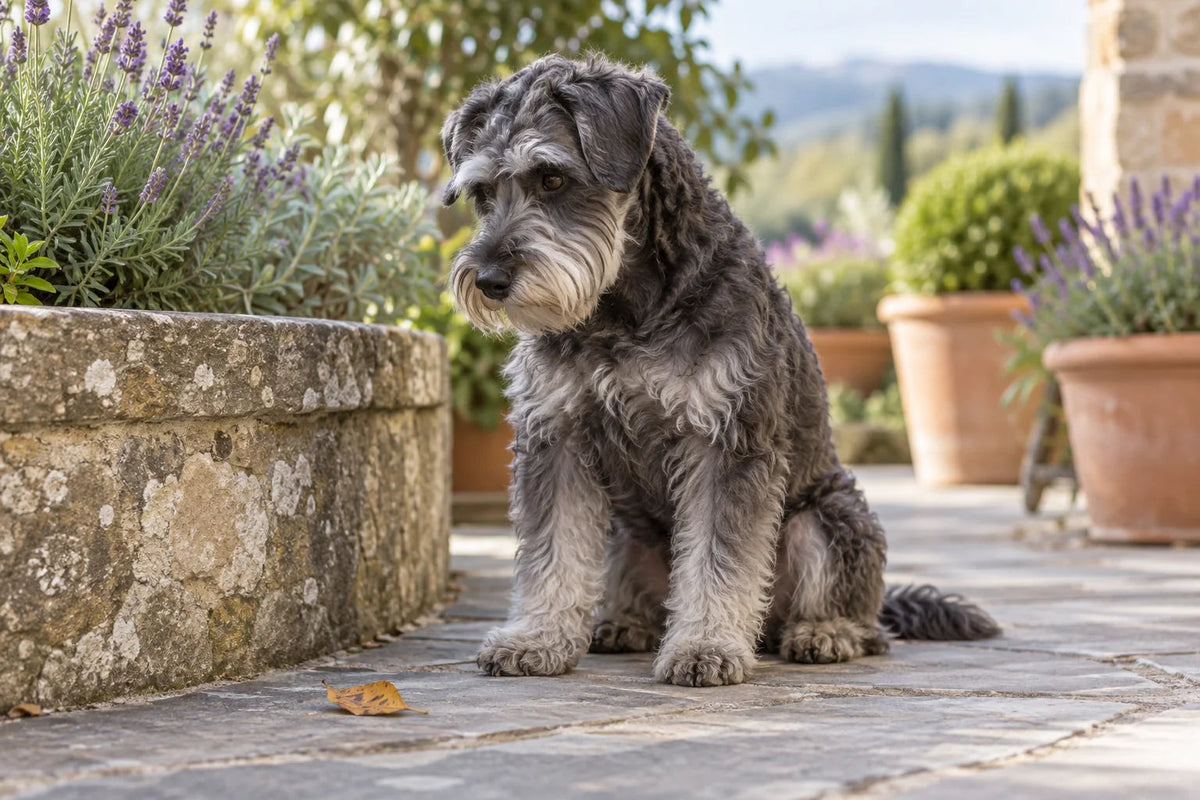
A Schnoodle may inherit an expressive beard, loose waves, tighter curls or a mixture that changes across the body. That makes a one-size-fits-all grooming recipe unhelpful. The beard and legs can need detailed care even when the body has just been trimmed.
Start by separating two decisions: how to keep the coat comfortable between appointments, and what finish you want the next haircut to produce.
A Schnauzer parent does not make every Schnoodle a wire-coated dog. Have the actual texture assessed before choosing specialist stripping or a clipping plan.
Understand the mix before copying a style
Schnoodles are Schnauzer–Poodle crosses and can vary considerably in size. PetMD's Schnoodle grooming guide describes straight, wavy and curly coats, with regular brushing and professional trims.
The coat may not behave exactly like either parent. Inspect the back, chest and legs separately, and ask your groomer which areas are dense, soft or more textured. Low shedding does not mean those areas can be left unchecked.
If the coat has a pronounced wire texture and you want to preserve it, seek specialist advice before body clipping. Our Miniature Schnauzer guide explains the parent breed's clipping-versus-stripping distinction, but it should not be applied automatically to a crossbreed's different hair.
Give the beard a brief daily routine
Beard hair can collect food, drinking water and outdoor debris. Gently wipe away ordinary residue before it dries into the hair, then dry damp ends. Check the hair close to the mouth without tugging at the lips.
When working through a small loose snag, support the hair near its base and begin at the ends. If the beard remains difficult to keep clean, ask for a more manageable shape or length. A very long beard is a styling choice, not a requirement for your dog to look like a Schnoodle.
Do not use scissors beside the lips or near the eyes to rescue a tangle. A professional can assess whether trimming is the more comfortable solution.
Check beneath the curl or wave
- Use a secure non-slip surface and a comfortable position.
- Separate longer hair into narrow layers.
- Brush with light strokes using a tool appropriate to the texture.
- Follow with a metal comb, starting with wider spacing.
- Only move to finer teeth where the coat already passes freely.
A VUNRO coarse-and-fine comb can help check smaller furnishings after brushing. It is a finishing check, not a reason to pull harder when you meet resistance.
Behind the ears, armpits, inner thighs and harness contact points deserve particular attention. Work with the limbs in natural positions and avoid repeated scraping on the skin. Tight or felted mats need professional assessment; never put scissors underneath them.
Discuss the face and body separately
Some owners want a defined beard and eyebrows, while others prefer a softer rounded face. Neither choice tells the groomer how long the body or legs should be. Agree these details separately and explain what you can maintain at home.
Keep eyes clearly visible and choose furnishings that do not repeatedly collect uncomfortable knots. If long leg hair is the difficult part, keeping it more practical may make a greater difference than shortening an already easy body coat.
For a suitable coat and an agreed clipped pet trim, owners with safe handling experience can consider the VUNRO D-Series clipper. It takes D-Series blades. Choose the finished length with guidance; clipping is not a substitute for hand-stripping where preserving a true wire coat is the agreed aim.
Prepare the coat for the work you are doing
Assess tangles before an ordinary bath and seek help with substantial matting first. Use dog shampoo as directed, protect eyes and ears, and rinse the beard, chest and leg furnishings as thoroughly as the back.
Blot away water and dry with comfortable moving airflow if tolerated. Check at the roots, especially in dense curls. For clipping, the coat needs to be clean, fully dry and combable; our coat preparation guide explains why a blade can catch when this stage is incomplete.
If specialist coat work is planned, ask the groomer how to schedule bathing around it. Different techniques should not be assumed to need identical preparation.
Keep nail care visible
Check nails and any dewclaws regularly rather than waiting for foot hair to reveal them. Ask for a demonstration if you cannot confidently identify the safe amount to remove.
A VUNRO nail grinder can help owners who prefer gradual filing, provided the dog is comfortable with the sound and handling. Use brief contact with breaks, keep long hair clear and stop before the quick. Never use longer contact simply to finish faster.
Adjust before grooming becomes difficult
Use the condition of the coat to judge the routine. If the comb begins catching sooner, or the beard and legs need more time than you can manage, arrange a review of length and technique.
The best Schnoodle trim is not the one that resembles a parent most closely. It is the one that suits this dog's coat, stays comfortable between visits and makes gentle everyday care achievable.
Keep learning
More from the Blade Blog
Whippet Grooming: Gentle Coat Care and Comfortable Nails
Read the guide →
Chihuahua Grooming: Smooth Coats, Long Coats and Tiny Paws
Read the guide →