

Reducing Blade Waste: Repair, Reuse and Responsible Disposal
Make better use of the blades you own, track repair decisions and check disposal routes without relying on unsupported green claims.
The practical answer
Prevent avoidable damage, repair suitable parts and confirm a safe local disposal route. No blade is automatically “eco-friendly” simply because it is metal or can be sharpened.
Start with what you can measure
Count blades bought, serviced, retired and lost over a working period. Note why each item left service. A blade retired because of accidental damage suggests a different improvement from one that has reached the end of its serviceable life. This gives your salon a practical baseline rather than an environmental slogan.
Apply the waste hierarchy to your kit
DEFRA’s waste hierarchy puts prevention ahead of reuse and recycling. For a grooming business, a useful application is to avoid unnecessary purchases and prevent avoidable breakage before thinking about the waste bin. DEFRA: guidance on the waste hierarchy.
- Check what you already own before ordering duplicate sizes.
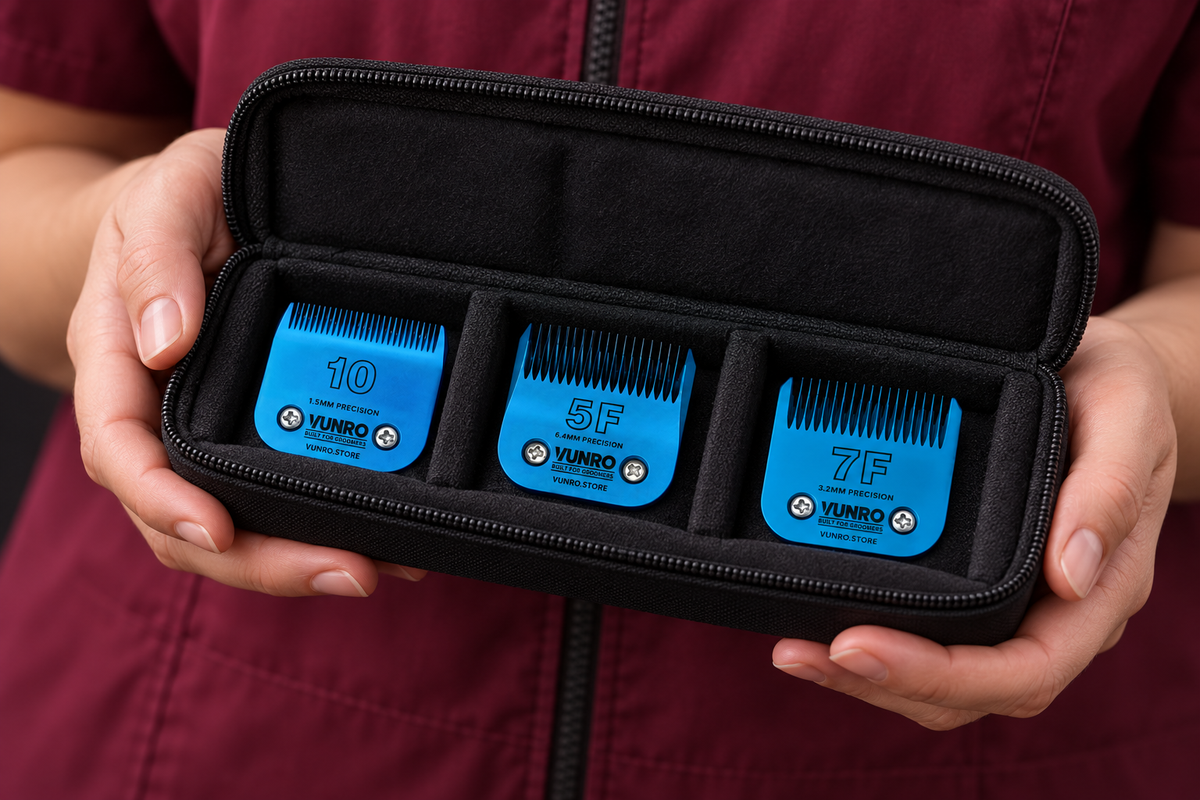
- Protect blade teeth during storage and transport; keep ready and damaged equipment clearly separated.
- Ask a specialist whether a serviceable blade or compatible component can be repaired.
- Retire unsafe equipment promptly even when you would prefer to repair it.
- Ask your waste provider how to package and dispose of the remaining materials safely.
Do not assume kerbside recycling is suitable
A small, sharp assembly may contain different materials, coatings and lubricant residues. Acceptance varies by collection service. Describe the item accurately to your provider and follow its instructions. Keep sharp parts contained so staff and waste handlers are protected. Electrical clippers and batteries need their own disposal arrangements; do not treat them as loose scrap blades.
Compare options without inventing a footprint
| Useful question | Evidence to keep |
|---|---|
| Can this model be serviced? | Written support or repair information. |
| Did repair restore safe performance? | Service record and your follow-up check. |
| Are replacement parts compatible? | Exact part and model references. |
| Did the new storage system reduce breakage? | Before-and-after retirement reasons over comparable periods. |
Be precise when talking to customers
A factual statement such as “we inspect blades and repair suitable assemblies before replacing them” is clearer than claiming an unmeasured carbon saving. Do not claim lower manufacturing emissions, responsibly sourced materials or universal recyclability without evidence that applies to the actual product.
The VUNRO approach in this guide is a maintenance and purchasing checklist. It is not a lifecycle assessment or a claim that one blade range has a smaller measured environmental footprint than another.
VUNRO replacement cutters are an option for the matching, otherwise serviceable assemblies. They do not repair a damaged fixed blade or fitting.
Read next
- Blade Maintenance: A Clean, Dry, Ready-to-Use Routine
- Sharpen or Replace a Clipper Blade? A Decision Guide
- Choosing Blades for a Grooming Business: Cost per Useful Groom
Sources and further reading
Guidance checked September 2026. The practical checklists and examples are VUNRO editorial guidance; the sources below support the underlying care or equipment principles.
Keep learning
More from the Blade Blog

A Faster Clipping Pass Is Not Always a Faster Groom
Read the guide →
From Used Tool to Ready Tool: Close the Gaps in the Care Process
Read the guide →


